Posts By :

kari.sharp@gmail.com

Finding Attractive Investment Opportunities Across Target Themes

Finding Attractive Investment Opportunities Across Target Themes 150 150 kari.sharp@gmail.com

Martis seeks to capitalize on company-specific or subsector-driven inflection points, as attractive investment opportunities arise in companies that are well-positioned for change or emerge in response to challenges in the areas of cost containment, operating efficiency and improved clinical outcomes.

To develop our conviction in a certain narrowly-defined end market, we follow a rigorous theme ideation process that involves speaking with numerous Martis ecosystem stakeholders. Through conversations with strategic advisors, industry executives, deal intermediaries, and other external sources, we form a holistic view of the theme and impacted subsegment, and in doing so also look to generate leads of prospective targets.

Below is a representative sample of some of the areas we have developed a thesis around. Let’s start a conversation!

Theme Key Rationale Active Platforms
(looking for add-ons)
Clinical Research Trials iconClinical Research Trials
  • Large and growing market with resilient demand drivers
  • Highly fragmented market in early consolidation phase
  • High premium placed on clinical site operators that can recruit and retain patients in expedient and efficient manner
Alcanza logo(2021)
Value Based Care iconValue Based Care
  • Broader shift from FFS to VBC models
  • Ability to drive meaningful cost reductions and improve patient outcomes
  • Fragmented PCP landscape presents M&A opportunity
Rise Health logo(2022)
Autism Care iconAutism Care
  • Large market that continues to grow with increased ASD diagnosis
  • Payors supportive of early intervention to improve outcomes and save costs
  • Significant whitespace exacerbated by provider supply shortages
Med Device CMO iconMedical Device CMO
  • Large and growing end-markets with increased outsourcing from OEMs to CMOs
  • Specialization drives sticky, recurring revenue with high switching costs
  • Highly fragmented space with opportunity to execute accretive M&A
Niche RCM SoftwareNiche RCM Software
  • Large, growing, and multi-faceted market
  • Opportunity for organic and inorganic growth to scale a platform
  • High-quality revenue given sticky, re-occurring nature of outsourced RCM spend
TPA Cost Containment iconTPA / Cost Containment
  • Growing market given increase in SMBs transitioning to self-funded insurance plans
  • Ability to bring new technology and processes to smaller, less sophisticated companies
Dental Care iconDental Care
  • One of the largest provider markets by spend, provider count and business count
  • Strong value proposition to physicians
  • Tangible value creation levers outside M&A
Clinical Trial Recruitment iconClinical Trial Recruitment & Drug Development Tools
  • Rising sponsor R&D spend pushes trial organizations to reach, recruit and randomize patients at scale, particularly from underrepresented populations (recruitment tools)
  • Sponsor and site need for centralized platforms for organizational data, protocol execution, and metric reporting (CTMS, RTSM)
  • Broad necessity of technology solutions enabling secure, accurate documentation for trial compliance and regulatory submissions (eSource, eReg, eTMF)

Martis Capital Named in Inc.’s 2022 List of Founder-Friendly Investors

Martis Capital Named in Inc.’s 2022 List of Founder-Friendly Investors 150 150 kari.sharp@gmail.com


Martis Capital Named to Inc.’s 2022 List of Founder-Friendly Investors

Annual roundup highlights the private equity and venture capital firms with the best track records of success backing entrepreneurs

October 5, 2022 – Martis Capital today announced that it was named in Inc.’s 2022 Founder-Friendly Investors list, honoring the private equity and venture capital firms with the best track records of success backing entrepreneurs. Martis’ inclusion affirms our position as an aligned investment partner specifically to founders and management teams of middle-market healthcare companies looking to scale their businesses.

Additionally, we are excited to note that out of 184 investment firms selected for this designation, Martis was one of only nine healthcare exclusive private equity firms named among this year’s honorees, as well as being one of the three healthcare exclusive firms to be honored for the 2nd consecutive year.

“We are honored to be recognized by Inc. as a Founder-Friendly Investor for a 2nd consecutive year,” said Mario Moreno, Managing Partner of Martis Capital. “We seek to partner with founder-led healthcare organizations that share our vision for improved patient care, compliance, and costs. We believe honesty, transparency, and reliability towards founders and their teams are the cornerstones of a successful investment partnership, and are grateful for all our founder partners, past and present, who have placed their trust in us. We look forward to more partnerships to come.”

“We chose to unite with Martis given their experience as a trusted partner for businesses seeking to increase access to quality care”, said Jon Harol, Founder and President of current Martis portfolio company, Lighthouse Lab Services. “Their collaboration has been critical to our continued growth, and we congratulate them on this well-deserved recognition”, said Mark Roth, CEO of Lighthouse.

“Fully investing in an entrepreneur, and their innovative vision, involves far more than the financial investment. By developing relationships with and supporting entrepreneurs for the long-term, these private equity firms are more than investors, they’re partners,” says Scott Omelianuk, editor-in-chief of Inc. media.

Introduced in 2019, the Founder-Friendly Private Equity Firms list quickly established itself as one of Inc.’s most resourceful franchises. It has become a go-to guide for entrepreneurs who want to grow their companies while retaining a meaningful ownership stake. As part of the evaluation process, Inc. interviewed founders to learn about their experiences and collect data on how their companies have grown as a result of these partnerships.

To see the complete list, go to: https://www.inc.com/founder-friendly-investors/2022


About Inc.

The world’s most trusted business-media brand, Inc. offers entrepreneurs the knowledge, tools, connections, and community they need to build great companies. Its award-winning multiplatform content reaches more than 50 million people each month across a variety of channels including websites, newsletters, social media, podcasts, and print.

The October 2022 issue of Inc. magazine is available online now at https://www.inc.com/magazine

About Martis Capital

Based in San Francisco, CA and Washington, DC, Martis Capital is a team of investment professionals who share a passion for helping build companies that seek to improve the quality of care and address the complex challenges facing the healthcare industry today. Martis seeks to identify exceptional investment opportunities and achieve shared growth objectives with founder-led companies and management teams. Martis Capital manages more than $2 billion of equity capital and is currently investing out of its fourth fund.

Martis Capital Announces Investment in Alcanza Clinical Research

Martis Capital Announces Investment in Alcanza Clinical Research 150 150 kari.sharp@gmail.com

Washington, DC, October 03, 2022,  ̶   To stay ahead of the urgent needs of equitable healthcare, Martis Capital, a leading middle market healthcare fund, is excited to announce its investment in Alcanza Clinical Research. Founded in December 2021 and named for the Spanish word “reach,” Alcanza is a clinical research site network platform dedicated to creating a sustainable and inclusive clinical trial environment for all.
As patient advocacy groups, research stakeholders, and regulators urge sponsors to expand clinical trial inclusion, Alcanza is actively transforming the model for research access to underrepresented populations across different races, ethnicities, genders, sexual orientations, disability statuses and more while enhancing clinical research quality and patient recruitment efforts.

As a first step, Alcanza has acquired five high-performing clinical research companies. These include Coastal Carolina Research Center, Boston Clinical Trials, ActivMed and Allcutis Research, Quest Research Institute and Charlottesville Medical Research across eight locations in Massachusetts, Michigan, New Hampshire, South Carolina and Virginia. Each site brings 20 to more than 30 years of experience in clinical research and a strong reputation for clinical and operational excellence, with complementary therapeutic specialization in psychiatry, neurology, vaccines and infectious disease, among others. Alcanza will continue to expand its national site network to provide full-scale Phase I-IV capabilities in multiple therapeutic areas while maintaining a broad client base of blue-chip biopharmaceutical companies and contract research organizations (CROs).

Alcanza is led by CEO Carlos Orantes, a recognized industry leader with nearly three decades of experience. Most recently, Orantes led the site operations for Accelerated Enrollment Solutions, the wholly owned captive site network of PPD, a global CRO part of ThermoFisher Scientific. There, he held responsibility for more than 50 sites across the U.S. and Latin America. “We are excited to collaborate with Martis Capital to develop the next-generation site model that combines education, community engagement and exceptional patient care for truly inclusive research,” said Orantes. “Our leadership team looks forward to expanding the reach of clinical research for all.”

“This partnership is a unique opportunity to drive sustainable improvements in the highly fragmented clinical trial space by focusing on improving disparities in clinical research,” said Mario E. Moreno, Managing Partner at Martis Capital. “Carlos and the Alcanza team have a clear vision for how their differentiated approach to clinical research can address these longstanding challenges.”

Martis Capital has made a meaningful commitment to grow and expand Alcanza’s capabilities and will continue to leverage its partnership approach, healthcare relationships and sourcing network to drive additional acquisitions and strategic partnerships.


About Alcanza Clinical Research

Alcanza Clinical Research is the next-generation site network established to support the most significant demands in our industry: diverse patient access, efficient enrollment performance and clinical quality.  It practices inclusive clinical research that delivers education and a range of clinical trial opportunities to all people on their terms.  Located in Massachusetts, Michigan, New Hampshire, South Carolina and Virginia, Alcanza specializes in conditions across psychiatry, neurology, dermatology and infectious disease therapeutic areas.


About Martis Capital

Based in San Francisco, CA and Washington, DC, Martis Capital is a team of investment professionals who share a passion for helping build companies that seek to improve the quality of care and address the complex challenges facing the healthcare industry today. Martis seeks to identify exceptional investment opportunities and achieve shared growth objectives with founder-led companies and management teams. Martis Capital manages more than $2 billion of equity capital and is currently investing out of its fourth fund.

For more information, please visit www.martiscapital.com or follow us on LinkedIn https://www.linkedin.com/company/martis-capital.


Contact:

Alcanza Public Relations: pr@alcanzaclinical.com

Martis Capital Business Development: bd@martiscapital.com

Martis Capital welcomes new Senior Associate and Associate to the investment team

Martis Capital welcomes new Senior Associate and Associate to the investment team 150 150 kari.sharp@gmail.com

Clarisse Feng joined Martis Capital as a Senior Associate in the San Francisco office. Previously, Clarisse worked at Perella Weinberg Partners, where she focused on restructuring and capital structure advisory. Clarisse started her career at Temasek Holdings, focusing on direct investments’ execution.

Clarisse received a Bachelors in Business Administration from the National University of Singapore and an MBA from the University of Pennsylvania.

JC Moore joined Martis Capital as an Associate in Washington D.C. office. Previously, JC worked at Coker Capital where he was part of the healthcare investment banking division of Fifth Third Securities. Prior to that, he was a part of the transaction advisory services group at FTI Consulting, primarily specializing in financial due diligence with a focus on middle-market healthcare services.

JC received a BS in Accounting and Management Information Systems from the Culverhouse College of Business at the University of Alabama and a Master of Accounting from the Stephen M. Ross School of Business at the University of Michigan.


The Home Health Evolution

The Home Health Evolution 650 500 kari.sharp@gmail.com

How ‘Care at Home’ ecosystems can reshape the way health systems envision patient care

 
By Dalglish Chew, Aneesh Krishna, Michael Morley, and Nithya Vinjamoori


As eager as Americans may be to leave their homes after close to two years of the COVID-19 pandemic, one prevailing sentiment has become clear: when it comes to healthcare, many consumers would prefer options that allow them to remain out of a hospital or facility. To meet that demand, healthcare systems are re-envisioning how Care at Home ecosystems may evolve. Even before the pandemic, Care at Home was one of the fastest-growing provider growth segments because of favorable demographic and regulatory trends. As we noted in “From facility to home: How healthcare could shift by 2025,” there is an estimated $265 billion worth of care services (representing up to 25 percent of the total cost of care) for Medicare fee-for-service and Medicare Advantage (MA) beneficiaries that could shift from traditional facilities to the home by 2025. In addition to consumer preferences for receiving home-based rather than facility-based care, research indicates that Care at Home has the potential to unlock higher-quality care for consumers at a lower cost for health systems. There are growing incentives across the healthcare industry to encourage that shift to cost-efficient and -effective care (for example, site-neutral payments and value-based contracting). The Centers for Medicare & Medicaid Services’ (CMS) recent regulatory changes also are expected to further accelerate this transition to Care at Home and community-based settings.Health systems may start by defining the components that make up healthcare services in the home and by examining market forces expected to shape these segments. They can then examine critical questions to help shape their Care at Home strategy and to determine where to focus their energy.

The components of a Care at Home ecosystem:

The Care at Home landscape can be segmented across two dimensions:

  1. Where does Care at Home take place in the patient’s care journey? Examples include preventive care and maintenance care, acute care, and post-acute care.
  2. Which patient populations is the service supporting? Examples include episodic patients, patients with chronic conditions, and/or patients with complex conditions.

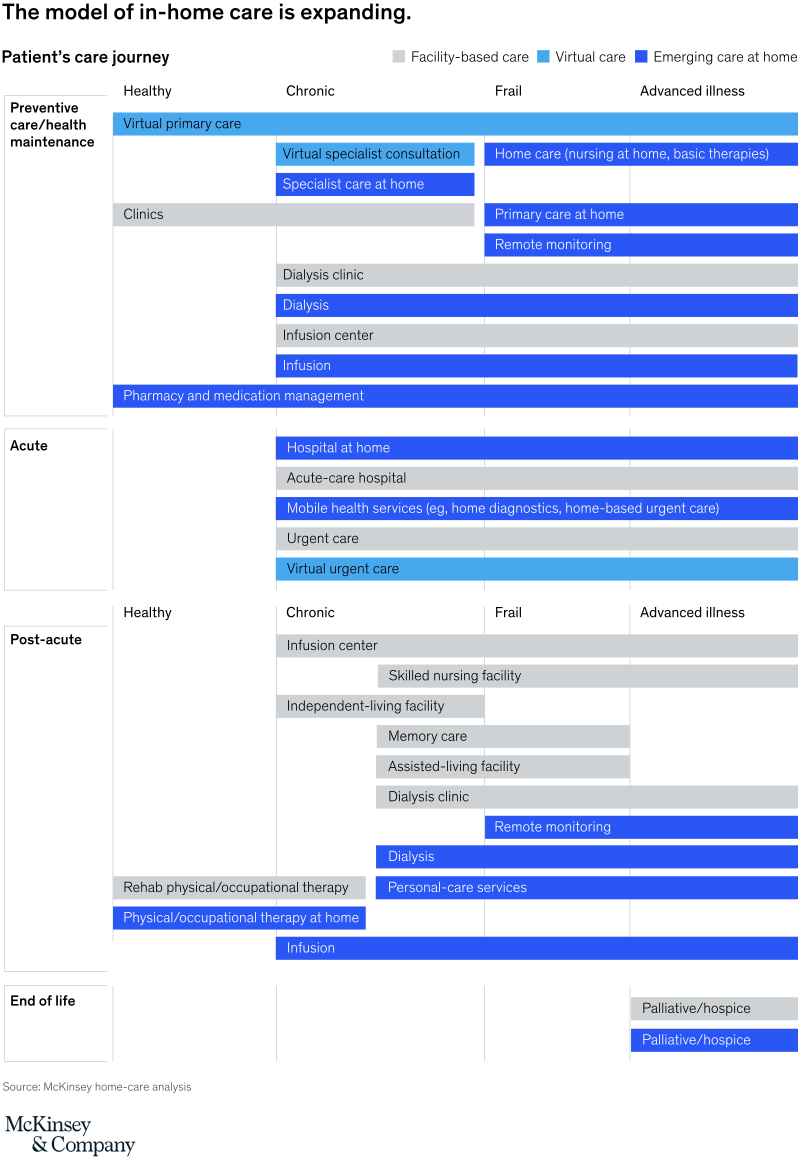
By mapping the different sites and modalities of care that specific patient populations might encounter throughout their care journey (Exhibit 1), health systems can begin to define the broader ecosystem of care—one that extends beyond the hospital and other facility-based settings and into the home—that they will need to achieve the best quality, outcomes, and experience for their patients.

Exhibit 1:

The model of in-home care is expanding.


An end-to-end view of these ecosystems of care also enables health systems to identify gaps in their current footprint and helps inform their strategy for assembling the required components of the ecosystem of care. This strategy may focus on building, buying, or partnering for Care at Home services.

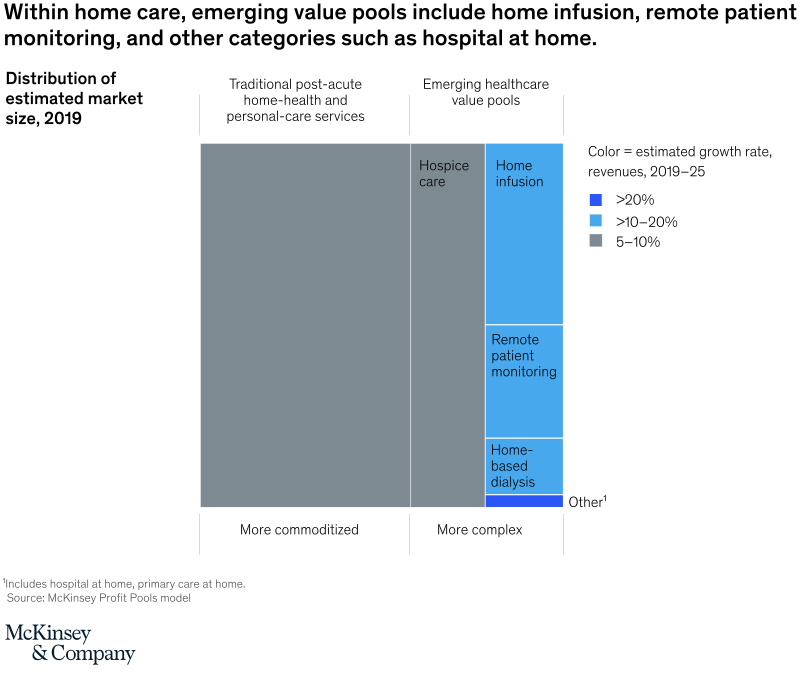
While our research has found that the traditional post-acute home-health segment remains the largest, new emerging home-care subsegments—such as home infusions, home-based dialysis, primary home care, and hospital home care—are growing rapidly (Exhibit 2).

Exhibit 2:

Within home care, emerging value pools include home infusion, remote patient monitoring and other categories such as hospital at home.


For health-system leaders, the size and growth of a Care at Home subsegment is only one of several factors to consider when developing their strategy. Although the economics of some subsegments may point to a case for a strong stand-alone business, health systems may be able to maximize value creation by stitching various subsegments into a comprehensive ecosystem of care across the patient journey.

Strategic questions to answer

As health systems embark on defining their Care at Home strategy, they can address several strategic questions early on in the process:

Subsegment focus: Which Care at Home subsegments and patient populations would the health system need to focus on initially? As health systems begin this journey, they will have to be intentional about competing in those Care at Home subsegments that align with their strategic objectives and growth aspirations. As outlined in this article, Care at Home subsegments have varying capacities for growth and are at different stages of maturity. In addition, a health system’s choice of patient population to target for Care at Home may have implications for the sources of value it intends to unlock and the design of its care model. This includes the ability to reduce the cost of care through value-based care and population health arrangements. For instance, the means and capabilities required to prevent disease progression or exacerbation will vary according to whether the target population is healthy, has stable and treatable chronic conditions, or is relatively frail and in advanced stages of illness. Across complex and multiple chronic-condition groups, a risk-based Care at Home model also can incentivize the incorporation of behavioral healthcare across all stages of the care journey, from preventive to post-acute care. The specific care journeys that health systems prioritize for their Care at Home strategy can also help determine their strategic posture toward institutional settings of post-acute and long-term care.

Mission alignment: How will the Care at Home strategy enhance the health-system objective of delivering more patient-centric and equitable care, including addressing previously unmet needs, such as social determinants of health, behavioral health, and wellness? Home- and community-based personal-care services such as in-home meal service, transportation, and wellness programs have the ability to address the nonclinical determinants of health. Overall health and these determinants are often correlated: those who are food insecure, for example, are more than twice as likely as people with no unmet social needs to report poor physical or mental health and to make multiple visits to the emergency room. As flexibilities for special supplemental benefits for the chronically ill (SSBCI) increase, we have noted that MA plans that offer these benefits can create “a chance to drive performance on cost management and improved health outcomes.” To the extent that these social determinants of health are also at the root of health disparities and inequities, Care at Home may have the potential to improve health equity and care outcomes.

However, emerging models of Care at Home may risk exacerbating health inequities if they do not account for the myriad disparities that could inhibit access. As discussed in our rural community report, the adoption of virtual care in rural areas continues to lag behind urban areas, in part because rural residents are eight times more likely to lack access to broadband at home. This may exclude them from receiving home health services that rely on telehealth or remote monitoring. Moreover, the well-intentioned desire to shift care delivery into patients’ homes presupposes a level of housing stability that continues to elude at least 17 percent of US households. These individuals face housing problems such as overcrowding, high costs, lack of kitchen facilities, or lack of plumbing facilities.7

If health systems hope to be welcomed into their patients’ homes, they may need to embed a heightened awareness of patients’ needs, preferences, and living circumstances in the design of at-home services and interventions. This heightened patient-centricity could well become a substantial differentiator not only in the area of patient experience but also in patient adherence and outcomes (for example, use of culturally and linguistically competent caregivers and medically tailored meals reflective of patients’ cultural preferences).

Strategic alignment: How should Care at Home align with the broader health-system strategy? As health systems develop their strategy for Care at Home, they will need to consider several interdependencies with their overall enterprise strategy. For example, while health systems may wish to rapidly shift care delivery to the home setting and unlock lower-cost, higher-quality, and more effective care, they may need time to set up the risk-based arrangements and financial incentives that make this shift value accretive. As such, health systems can evaluate the decision to offer in-home services in the context of their overall trajectory to risk-based payment. They may consider a glide path that manages the tension between the incentives of different payment models in which they participate. These evaluations may vary according to the features of health systems’ specific markets and regions, such as demographics, payer market dynamics, and their existing footprint of brick-and-mortar sites of care. Additionally, since institutional sites of long-term, post-acute care will continue to be required to serve patient needs that cannot be satisfied in the home, health systems that do not own a facility-based post-acute footprint will likely need to decide whether to codevelop their strategy with their post-acute provider partnerships, or whether to develop Care at Home independently of their post-acute strategy.

Capability and operating-model requirements: What new capabilities and operating-model changes may be needed to pursue the Care at Home opportunity?  Pursuing the Care at Home opportunity will present unique operational challenges, especially for providers whose operating models have been designed and optimized for care delivery in institutional settings. For example, the delivery of Care at Home presents additional hurdles associated with clinical requirements (for example, ensuring patient adherence via remote monitoring and the ability to ensure a sterile environment for the patient) as well as technological requirements (for example, networks to support reliable data transmissions and Internet of Things capabilities). Also, delivering Care at Home introduces specific workforce considerations (for example, geographically dispersed, contingent workforce, with historically high turnover, and state-specific laws that permit collective bargaining of home-care workers) different from those of care delivered in institutional settings. Efforts to overcome the chronic shortage of home-health and personal-care aides —demand for which is expected to grow 33 percent over the next decade—could include reskilling programs that offer workers advancement into more specialized, better-paid caregiving positions or partnerships with institutions of tertiary education to train and educate the next generation of home caregivers. Given these different operating requirements, health systems will likely need to consider whether Care at Home should be delivered through their existing operating service-line model, or whether it will be more successfully operated by a dedicated division.

Growth aspiration: Should the Care at Home strategy be focused primarily on optimizing the care continuum in existing markets or on a platform for expanding geographically? Health systems are often constrained in their long-term growth outlook by the demographic growth of their existing markets. Moreover, although hospitals continue to represent the majority of EBITDA in healthcare-provider profit pools, health systems that pursue diversified models of growth that encompass a greater range of care-delivery assets tend to generate superior outcomes to those that are acute-focused. As a vector of nonacute growth, Care at Home offers a platform for health systems to codevelop a new offering in their existing markets, with the possibility to then scale it nationally with greater capital efficiency. However, given that the pursuit of national scale will likely require both significant capital and operating experience in Care at Home that are otherwise not easily accessible, strategic partnerships can serve as an important unlock in accelerating the progress of health systems’ growth aspirations in Care at Home, both within and beyond their current markets.

Partnership considerations: Which parts of the Care at Home value chain could be developed internally and which through a strategic partnership? As described in “The next wave of healthcare innovation: The evolution of ecosystems,” there is an increasingly diverse and fragmented care-delivery ecosystem, which affects Care at Home. As these options proliferate, an unmet need exists to organize these activities through building new businesses, acquiring capabilities, or partnering with other service providers. This initiative may, in itself, require a brand-new set of capabilities for health systems, including the ability to partner with players from other healthcare segments. As large national payers ramp up their investments in both home-health start-ups and large providers of in-home care, and private-equity and venture capital investors increasingly fund innovation in Care at Home models and enablers, health systems could leapfrog others by pursuing a programmatic strategy of seeking capital and operating partners to help accelerate their Care at Home agendas.

The COVID-19 pandemic has underscored the potential for improved care quality, clinical outcomes, and superior patient experience. Care at Home is evolving as an indispensable component of health systems’ efforts to position themselves for success now and in the future.

Martis Capital recognized as a Top 50 PE firm in the Middle Market for 2022

Martis Capital recognized as a Top 50 PE firm in the Middle Market for 2022 448 486 kari.sharp@gmail.com


Martis Capital is excited to have been named a Top 50 PE Firm in the Middle Market for 2022 for the second year in a row. Additionally, we are pleased to note that out of all the investment firms selected for this designation, Martis was the only healthcare exclusive private equity firm named among this year’s honorees.

Martis is honored to be included among this group of leading PE firms. This nomination reflects our commitment to being a transparent and thoughtful partner to middle-market healthcare companies.

Barry Uphoff, Founding and Managing Partner of Martis Capital, said, “Our goal at Martis Capital is to be the investor of choice for leading companies striving to improve patient outcomes, reduce costs and increase compliance across the healthcare ecosystem. As part of our investment approach, we strive to be a valuable resource for our portfolio companies and emphasize alignment within our relationships. We are thrilled to be included on the list of Top 50 PE Firms in The Middle Market for the second consecutive year.”

Martis did not pay a fee as part of the selection process.  To read more about the Top 50 PE program and view a detailed list of winning firms, please visit TOP 50 PE Firms — GCI Publishing 

Martis Capital Announces Investment Team Promotions

Martis Capital Announces Investment Team Promotions 150 150 kari.sharp@gmail.com


Martis Capital is pleased to announce three promotions within the firm’s investment team. Aseem Nambiar has been promoted from Vice President to Director, David Zhang from Senior Associate to Vice President, and Charlie Fiessinger from Associate to Senior Associate.

Based in San Francisco, CA, Aseem works closely with DCN Dx, Lighthouse Lab Services, and WellHaven PetHealth. Prior to Martis, he held an operating role at DaVita, following his time at Waud Capital and UBS. Aseem received a Bachelor of Science in Quantitative Economics from Tufts University and an MBA from the University of Pennsylvania.

Based in San Francisco, CA, David works closely with Lighthouse Lab Services. He started his career at Barclays, then focused on middle-market buyout investing at Welsh, Carson, Anderson & Stowe and Calera Capital. David received a Bachelor in Business Administration from the Stephen M. Ross School of Business at the University of Michigan.

Based in Washington, DC, Charlie worked previously at BV Investment Partners where he focused on tech-enabled business services investments. He began his career at Alvarez & Marsal before joining William Blair. Charlie received a Bachelor of Science in Applied & Computational Mathematics and Statistics from the University of Notre Dame.

“As we enter our second decade as a firm, Martis is experiencing a remarkable period of growth. Aseem, David, and Charlie are great examples of that growth, and we’re thrilled to recognize their professional accomplishments and contributions to the firm.” said Barry Uphoff, Martis’ Founding & Managing Partner.

About Martis Capital

Martis Capital is a private equity firm focused exclusively on the healthcare industry. With offices in San Francisco, CA, and Washington, DC, Martis seeks to invest in middle-market, growth-oriented companies that provide innovative and cost-effective products and services within targeted segments of the North American healthcare industry.

For more information, please visit www.martiscapital.com or follow us on LinkedIn.

6 Ways To Eliminate The Hurdles Keeping You From Success

6 Ways To Eliminate The Hurdles Keeping You From Success 650 500 kari.sharp@gmail.com

** Skip to 5:15 to pass advertisements **

Martis Capital completes a majority recapitalization of Lighthouse Lab Services

Martis Capital completes a majority recapitalization of Lighthouse Lab Services 150 150 kari.sharp@gmail.com

Martis Capital announced today that it has acquired a majority interest in Lighthouse Lab Services, alongside current investors NaviMed Capital and the Company’s management team. Headquartered in Charlotte, North Carolina, Lighthouse is an end-to-end provider of turnkey lab build-out and management services to clinical labs across the United States. The Company provides a comprehensive suite of solutions across outsourced lab management, consulting, recruiting, supply chain management, compliance, equipment sales and more. Lighthouse serves over 1,000 laboratory clients including physician office labs, reference labs, and hospital labs.

Mark Roth, CEO of Lighthouse Lab Services, commented, “This is a tremendous milestone for the entire Lighthouse team. We are thrilled to have the opportunity to work with Martis Capital to advance our mission and help laboratories across the country start, run, and grow quality testing operations.”

“The Martis Capital team is very proud to join Lighthouse Lab Services in their journey and support the mission to continuously improve patient access by bringing high quality diagnostic testing closer to the point of care.” Mario Moreno, a Partner at Martis, also commented, “We at Martis Capital are thrilled to partner with such a strong team and support Lighthouse’s service quality and innovation in the diagnostic laboratory end-market by providing high value to patients, providers, and payors alike.”

Financial terms have not been disclosed.

About Lighthouse Lab Services
Lighthouse Lab Services provides an end-to-end suite of services enabling customers to start, run, and grow their clinical labs. Service offerings include assistance with licensure and compliance with accreditation requirements, scientific method development and validation for a variety of applications ranging from toxicology to infectious disease, recruitment of Lab Directors and other lab staff, as well as ongoing operational support. The Company boasts a deep bench of Ph.D. and masters-level analytical chemists, pharmacologists, toxicologists, and laboratory scientists, as well as experienced teams specializing in recruiting and staffing for labs. Lighthouse is headquartered in Charlotte, North Carolina. Learn more at www.lighthouselabservices.com.

About Martis Capital
Martis Capital is a private equity firm focused exclusively on the healthcare industry. The Martis team manages more than $1.3 billion of equity capital and is currently investing out of its third fund. With offices in San Francisco, CA, and Washington, DC, Martis seeks to invest in middle-market, growth-oriented companies that provide innovative and cost-effective products and services within targeted segments of the North American healthcare industry.  For more information, please visit www.martiscapital.com or follow us on LinkedIn https://www.linkedin.com/company/martis-capital.

Adapting to Labor Shortages in the Healthcare Sector

Adapting to Labor Shortages in the Healthcare Sector 650 500 kari.sharp@gmail.com

Will bonuses and benefits be enough to tackle healthcare’s workforce shortages?

by Dave Muoio

The provider industry is caught in the midst of a widespread labor crunch that, according to recent data, shows no sign of slowing down in the months and years to come.

At best, the shortage of workers has led to incremental increases in labor expenses and warnings to investors that margins may run a bit tighter in the coming quarters.

At worst, understaffed units, rampant overtime and burnout are leading a growing number of nurses and other healthcare workers to retire or transition to another industry.

These shortages have also fueled labor disputes from New York to California, the results of which are often worker strikes and subsequent disruptions in patient care.

The short- and long-term threats of understaffing have led several systems to open their wallets.

Among the most prominent of these efforts came from Washington-based Providence, which announced this month that it would be investing more than $220 million into various bonuses and pay adjustments in an effort to retain its more than 120,000 employees and fill its roughly 17,000 job openings. Recent weeks have also seen reports of five-figure signing bonuses for nurses and a return of the workforcewide retention bonuses that were common during the first year of the pandemic.

Alongside a hiring push, a recent survey of 150 health systems conducted by professional services firm Aon suggested that more healthcare employers are adopting a broader portfolio of benefits for their workforces. With 93% of respondents saying they are considering benefits strategies related to attracting and retaining workers, offers like tuition reimbursement and greater healthcare coverage have become commonplace in the competitive healthcare labor market.

“Attracting and retaining talent remains a top priority and health systems have prioritized benefits as a mechanism to reward their workforce,” Sheena Singh, senior vice president of Aon’s national healthcare industry practice, said in a statement accompanying the survey. “This is a trend that will continue with a shortage of qualified health professionals and rising demand for health care services, as these organizations seek to build a resilient workforce in the wake of the COVID-19 pandemic.”

Unfortunately for hospitals and health systems, healthcare worker representatives and competing healthcare recruiters alike don’t see these strategies as more than a Band-Aid on a festering wound.

“It’s a temporary fix; people aren’t buying it,” Sal Rosselli, president of the California-based National Union of Healthcare Workers, said in relation to Providence’s incentives. “Workers are smart, they know what’s going on here.”

Rosselli said he doesn’t believe there is a shortage of registered nurses and other healthcare workers currently living in the U.S. The issue, he said, is that unsafe working conditions, employers’ inflexibility and an ever-growing focus on profits over patient care have led much of the country’s labor supply to seek out other opportunities where they feel more appropriately rewarded for their time and effort.

David Coppins, CEO and co-founder of healthcare staffing and scheduling platform IntelyCare, was of a similar mindset.

Health systems’ long-running view of nurses as a cost, rather than a revenue generator, has given hospitals a reverse incentive to skirt the line of understaffed units, he said. It’s driven an underlying culture across hospitals that’s reduced workers’ voices and—along with the day-to-day struggles of the job itself—has many workers seeking alternatives.

With this in mind, Coppins said it’s little wonder that travel nursing agencies and per diem scheduling services like his have “exploded across the country” since the start of the pandemic.

“We get a lot of disenfranchised hospital nurses that come to us and feel like they’re finally in control of their lives, and they get an opportunity to earn good money, control their schedule, they’re appreciated,” he said. “We have regular feedback sessions, and it’s kind of remarkable. We’re the beneficiaries of [hospitals’] poor activity, their inability to see the forest for the trees.”

But will hospitals’ retention bonuses and more generous benefits packages be able to stem the industry’s exodus of workers? For Coppins and Rosselli, the answer is a hard “no.”

“Look, most health systems have great benefits. I’m not going to say ‘oh, they need this type of retirement plan or a wellness service,’” Coppins said. “I’m sorry to burst the bubble, but there’s no magic bullet of certain benefits that are going to improve it. It’s fundamentally changing things.”

“Not absent having the security of safe staffing, the ability to make clinical decisions about how to provide care, having a voice, the staffing levels, how care is given and the assurances that the employer is doing everything they can to keep people safe around [personal protective equipment (PPE)] and staffing levels—not absent that, no,” Rosselli said. “People will not be making decisions based on higher 401(k)s.”

Singh was less willing to write off the value of an effective benefits offering, which she said can ensure employees “have the sufficient tools to thrive within the organization and their life.”

Citing her company’s survey data, she noted that many employees don’t know when their employer is providing benefits offerings that directly address burnout, such as employee assistance programs or digital mental health tools. Most employers could be doing more to raise awareness of these offerings, thereby improving the wellness of their workforce and receiving the maximum return out of their benefits investments, she said.

Still, Singh agreed with the broader thesis that no individual benefits—either immediate or recurring—will be enough to make workers ignore any deep-seated grievances with an employer or the industry at large.

“There’s obviously short-term strategies that can be put in place like retention bonuses and spot bonuses that we’ve seen groups put in, but that’s not going to solve this issue,” she said. “I absolutely agree that really understanding if your culture is supporting retention from an investment-in-your-talent perspective, providing your employees a sense of purpose [and] also focusing on recognition of the value they bring to the organization is so critical to retaining your employees.

“Benefits is still very much a critical component to retention. It is not the one and only answer to that puzzle, though.”

Giving employees a voice

It’s one thing to tell employees that they are valued and another to make them believe it, Coppins said. Eighteen months of thank-you’s from executives are now ringing hollow for workers who have seen few meaningful signs of relief during their day-to-day hardships.

“One of the big problems is their answer is ‘You’re a hero. You can do it, you are amazing.’ They give them plaques, they give them recognition, they buy them pizza and they think that this is actually solving the problem,” he said. “I was at a conference a couple of weeks ago and the CEOs of major health systems were on the panel in a conversation on shortage of staff. Two of the CEOs actually said we need to provide more recognition, more appreciation. I’m in the audience thinking ‘Dude, you’ve still got your head in the sand.’”

For starters, healthcare organizations need to demonstrate that workers’ safety and well-being are prioritized, Rosselli said. During a pandemic, this means adequate PPE, COVID-19 testing, proper training, safe staffing, mental health care and other “minimum precautions and protocols” need to be put in place to keep workers from quitting out of concern for their own safety, he said.

Rosselli and Coppins also stressed the limited avenues nurses and other front-line workers have to raise concerns regarding administrative and clinical issues.

To address this, Coppins suggested organizations introduce programs that give those workers more opportunities to rub shoulders with decision-makers and propose solutions to organization-wide issues. Internal hackathons, for instance, “can be brilliant and really valuable to help the nurses feel like they’re being heard and have an opportunity to change things,” he said.

But perhaps more meaningful to the workforce is demonstrating that an organization is willing and able to elevate deserving front-line employees into the C-suite, Coppins continued.

“Put nurses in executive roles—not just a titular position with no authority, but actually put someone whose grown up through the nursing ranks into executive roles that have authority in the hospital system,” he said. “That does a couple of things. One, you finally get their perspective when decisions are being made, a seat at the table. Two, it’s also visibility for other nurses to know that they’re being heard and there’s a potential career path for them.”

For workplaces with an active labor union, Rosselli stressed that these groups are, at their core, a forum for employees to communicate their interests with an employer.

The union leader pointed to labor-management partnerships as a proven vehicle for healthcare organizations to promote constructive discussions between workers and executives, increase employees’ buy-in and, ultimately, improve the delivery of care.

“[Organizations must] collaborate with their workers and, in our case, their workers’ union,” Rosselli said. “That’s the answer: giving their workers a real voice.”

Flexible scheduling is a leading demand

While there’s no “magic bullet” benefit that will override cultural frustration and safety, Coppins and Singh did highlight one standout policy change for hospitals targeting worker burnout and retention: flexible scheduling.

“It’s too easy to underestimate the impact of truly inflexible scheduling, the workload and being ignored,” Coppins said. “It’s hard to really quantify the impact of that, but [hospitals] are seeing it right now [as] travel nursing has exploded across the country.”

Sixty-nine percent of healthcare employers surveyed by Aon acknowledged that flexible work options—whether that’s varied scheduling or more permissive time-off policies—are a frequent demand and need to be considered alongside the rest of a benefits package, Singh said.

Unfortunately, both she and Coppins acknowledged that introducing that flexibility to clinical staff is substantially more difficult for healthcare employers than other traditional benefits offerings, such as increased insurance coverage or student loan forgiveness.

“It’s really hard because most of these facilities are [using] scheduling platforms that make it very difficult to allow flexibility,” Coppins said. “But I will guarantee these hospitals that if they hired a scheduler—if they already have one, hire a second one—whose only job is to try and swap shifts to try and allow flexibility in the system, that will retain nurses. That’s the number one biggest thing: [Nurses] need to know that if there’s something big coming up in their lives they will have flexibility in their schedule.”

Despite their reputation for rigidity, Singh noted that healthcare organizations will overhaul entrenched operations and procedures when their backs are against the wall. Widespread resignations and open job listings could be just such an incentive.

“If you think about COVID, a lot of health systems … pivoted quickly with virtual health and telehealth, because they had to,” she said. “That’s why I think health systems are going to do this: They know it’s a need and they know it’s a certainty that if they don’t keep up they’re going to lose to other competitors, whether that’s another health system or a different industry. They’re going to make [flexible scheduling] happen, but that’s definitely going to be the one that’s the biggest lift.”

To read the full article, visit: Will bonuses and benefits be enough to tackle healthcare’s workforce shortages? | FierceHealthcare